Orchard Garden Update
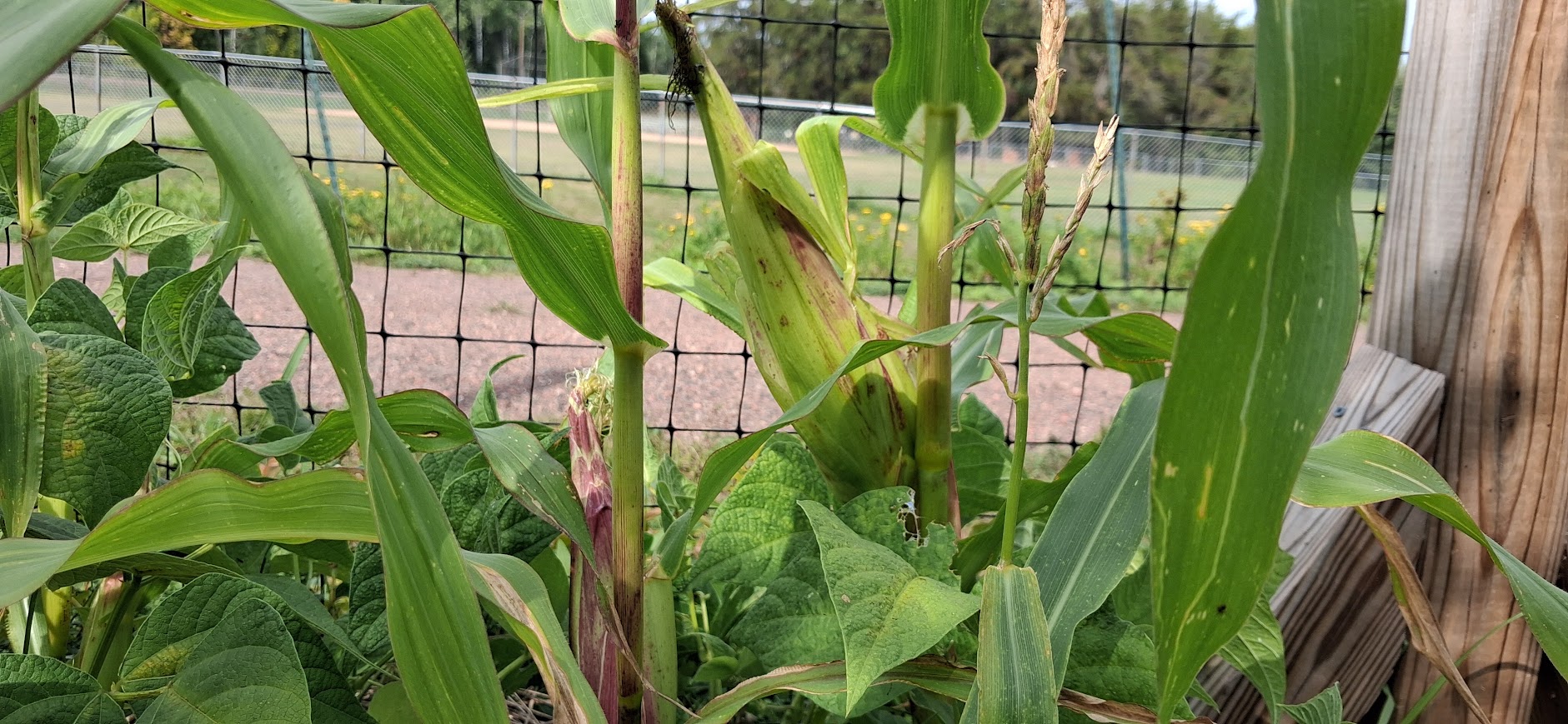
Our little orchard garden experiment has been really fun. This spring we decided to plant a small garden in our orchard on the side of the Clair Nelson Center closest to the ballfield. It’s not a big space; it doesn’t get as much sun as I’d like, and the soil is sterile sand and gravel that was placed during the process of building the community center. Despite all of those factors, we actually managed to grow some food! All of the plants we grew were quite a bit shorter than we expected, but amazingly those small plants grew enough food to supplement our youth night menu. And there is still more to come. While our corn is very short, it still produced ears of corn that will soon be ready to harvest. This is one of the advantages of growing Bear Island Flint corn, a variety that has been grown in our region for hundreds of years. Bear Island Flint Corn prioritizes growing seed over height, so in short seasons and difficult conditions it still produces ears of corn. We have also seen a lot of Wine Cap mushroom production, a lovely side effect of the inoculated deep mulch garden biobeds that we made. This year was an experiment, and it did produce food, but the efforts we made this year will also improve the soil health and hopefully translate to better growing conditions next year. This type of gardening, sometimes referred to as “regenerative” gardening, focuses on building soil health and water retention. Regenerative gardening is one of the best methods of gardening in our area, which is dominated by poor soils and intermittent droughts.
If you are curious about the regenerative gardening methods we used, you can call the community center (218-353-0300) and schedule a time to visit our garden and talk to me (Kaare Melby) about how to implement these methods in your garden.