Wild Rice, Subsistence Practices, & Supporting Traditional Ways of Life
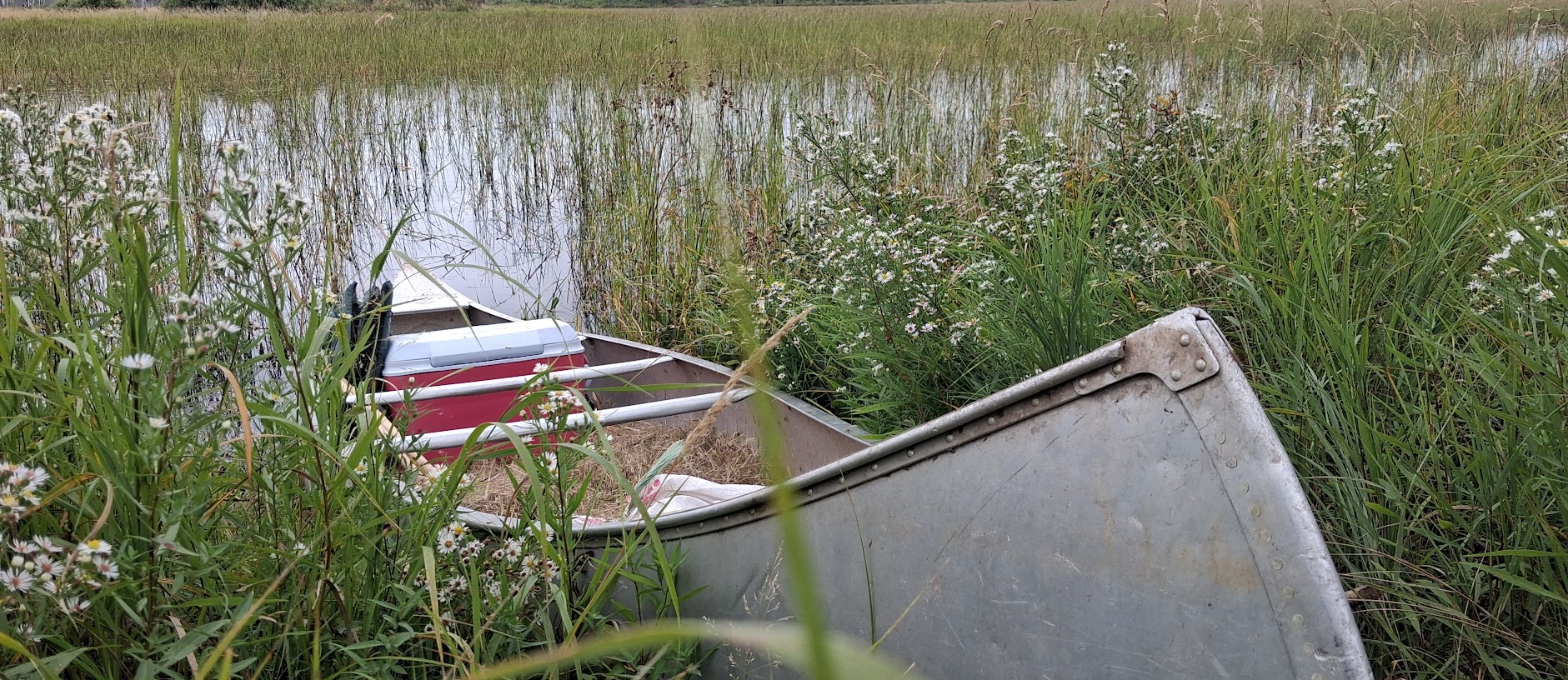
Wild Rice, or Manomin in the Ojibwe language, has a long history of feeding those who know how to harvest and process it. While wild rice is more abundant in lakes and rivers southwest of our region, there is always some rice to be found in our area. This year, there seems to be a bumper crop in local lakes and rivers. We even saw DNR checking licenses at the end of the day at a local landing. Usually there aren’t enough wild rice harvesters to get the DNR out, but this year is different. Good rice beds, especially with reports of small picks in the southwest, drew many people to harvest in the northland. And they are still out there, harvesting rice as it ripens in a mosaic across our region.
After a long day of harvesting wild rice, one of my ricing partners asked me: If someone harvests a relatively small amount of wild rice, under 100 lbs, how did they get it processed before the Finland Wild Rice House was here? The question is important, and the solutions were not easy. Before the Finland Wild Rice House, the only processors around were several hours away and required a minimum of several hundred pounds of wild rice. The only option you had was to find other people who also had rice and mix it all together in order to meet the minimum, then drive the rice long distances to drop it off, and then to pick it up. Or you could try to figure out how to process it at home using the rather difficult traditional methods (or sometimes you could find someone who had a small backyard processing operation). None of these options were very practical. And this difficulty caused many people to simply not harvest wild rice in our region. Once the Wild Rice House was opened, it solved this problem by offering local small-batch processing with a minimum of 60lbs of wild rice.
This has reignited a local passion for harvesting and eating wild rice. This, like many of the things we do at Friends of Finland, has helped to restore the traditional ways of subsistence that have supported life in this rugged environment since time immemorial. The Finland Wild Rice House approaches this task as a service to the community. As a non-profit operation, they are focused on working with subsistence harvesters and making sure to keep wild rice accessible locally. Their processing fees are a little higher because they don’t buy and sell rice, but their passion for processing wild rice has shown itself in some of the most beautiful finished wild rice that I have seen from any processor. This goal of making small to medium batch wild rice processing accessible is an important goal, not just for us, but for communities all across the Northland. So they are also willing to help other communities get started with creating a processing facility of their own.
If you are interested in learning more about harvesting and processing wild rice, check out the Finland Wild Rice House Website: